Choose a first POD idea you can actually finish
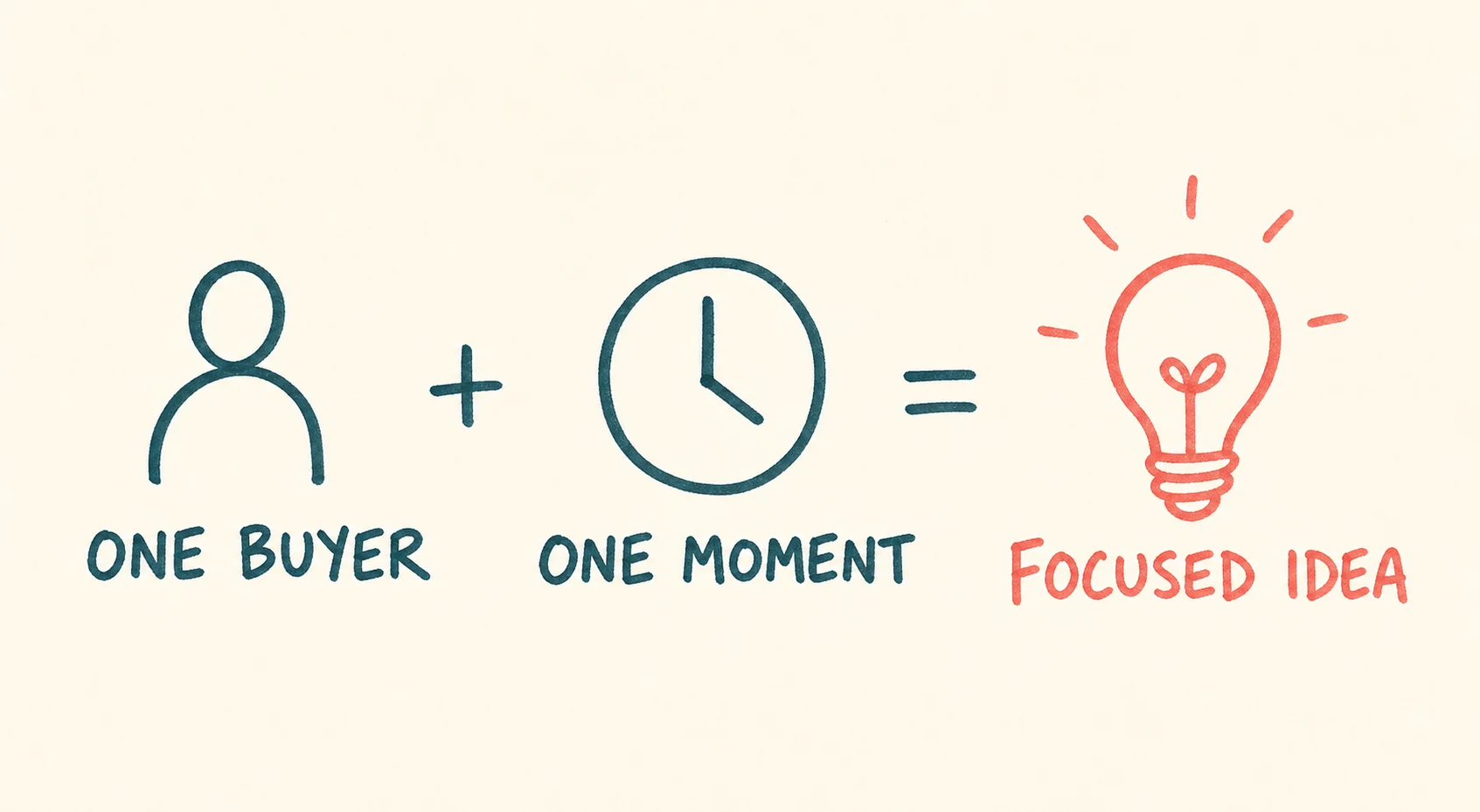
Pick one buyer and one moment before you search for a niche. A first POD idea is ready when you can explain who buys it, why now, and what the product helps them say or do.
How do I choose a focused print-on-demand idea?
Quick answer
Pick one buyer and one moment before you search for a niche. A first POD idea is ready when you can explain who buys it, why now, and what the product helps them say or do.
Reviewed Jul 25, 2026
Start with one person and one moment
Start with one person and one moment. Suppose you are making a graduation gift for a newly qualified nurse. That brief gives you a buyer, an occasion, and a reason to buy. 'Funny shirts' does not give a designer or a listing that much to work with.
Keep the first brief narrow enough that the product, price, visual, and listing all point at the same person. You can widen it later, after you have something real to learn from.
Write one sentence before opening the design tool
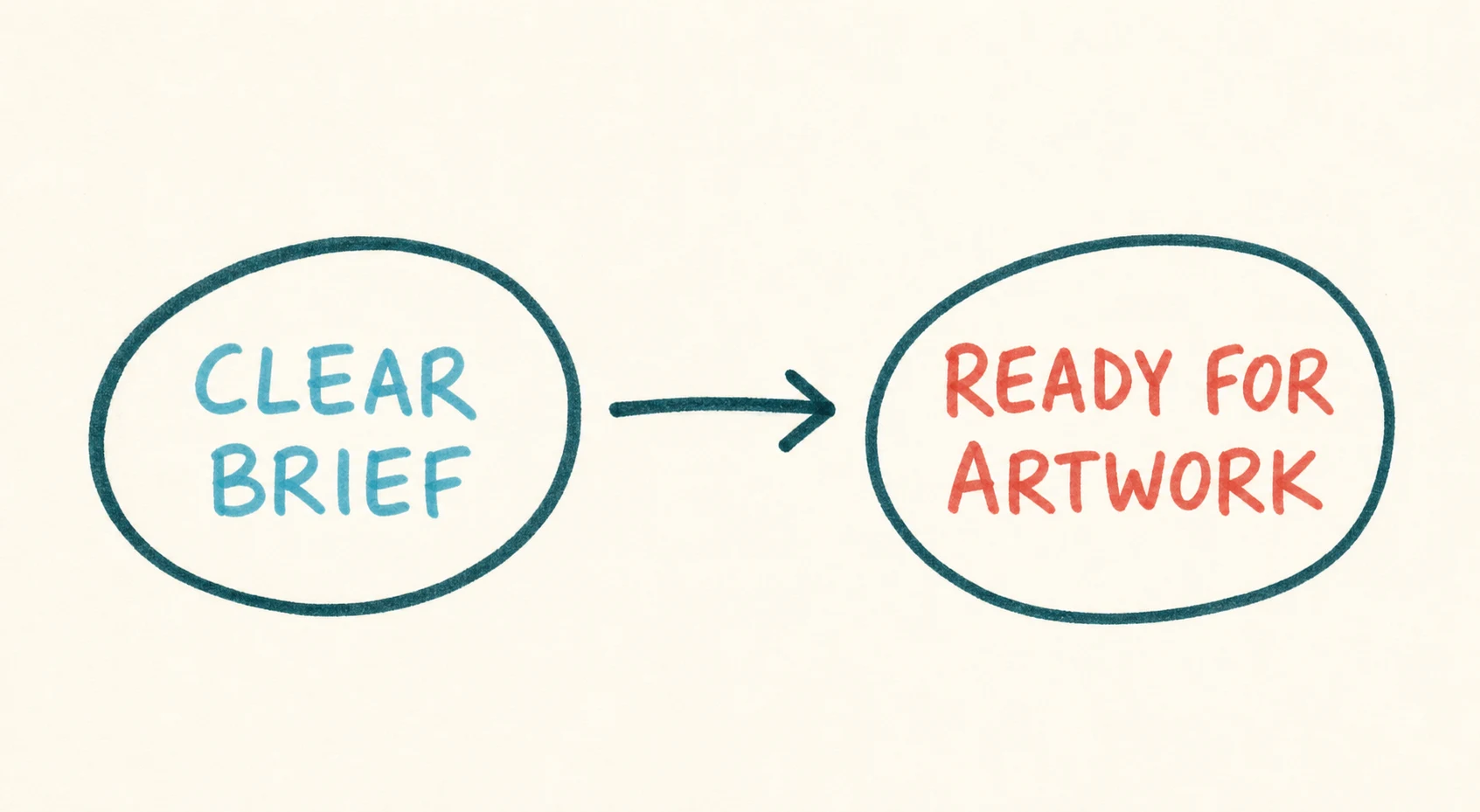
Try this: 'This mug helps a newly qualified nurse celebrate the first day on the job.' It is plain on purpose. If you cannot say what the product helps someone express, celebrate, remember, or use, the idea is not ready for artwork.
- 1
Name the buyer
Use a person you can picture, not a giant audience label. 'Newly qualified nurse' gives you more to work with than 'everyone who likes coffee.'
- 2
Name the moment
Give the product a reason to exist now: a graduation, a first shift, a birthday, a move, or a small everyday ritual.
- 3
Name the promise
Finish the sentence with one clear job. Leave out brands, characters, teams, lyrics, celebrities, and slogans you do not own or license.
- The buyer is identifiable
- The occasion, identity, or practical use is clear
- The product promise fits in one sentence
- The idea does not depend on somebody else's intellectual property
Check interest after the brief is clear
Once the sentence works, use Google Trends to compare the plain-language versions a buyer might actually type. Look for seasonality and regional differences, and write down the date and location you checked.
That comparison is a signal, not a verdict. It cannot prove marketplace demand, conversion, margin, or legal safety. Do not let a rising line talk you into a vague product.
Sources used for this guide
Check the linked source before acting on time-sensitive fees, policies, availability, or production claims.