Choose your first POD product without catalog overload
Compare a small shortlist against the same buyer, region, price, print area, and sample plan.
Which print-on-demand product should a beginner launch first?
Quick answer
Compare a small shortlist against the same buyer, region, price, print area, and sample plan.
Reviewed Jul 25, 2026
Let the design and buyer choose the format
The right first product makes the design legible, the buyer's use obvious, and the complete cost workable. Detailed art may need a poster's room. A short gift message may belong on a mug. Apparel adds size, fit, and return questions.
Keep the same buyer brief while you compare. If the product changes the audience, use case, and price all at once, you are testing a different idea.
Compare the same order
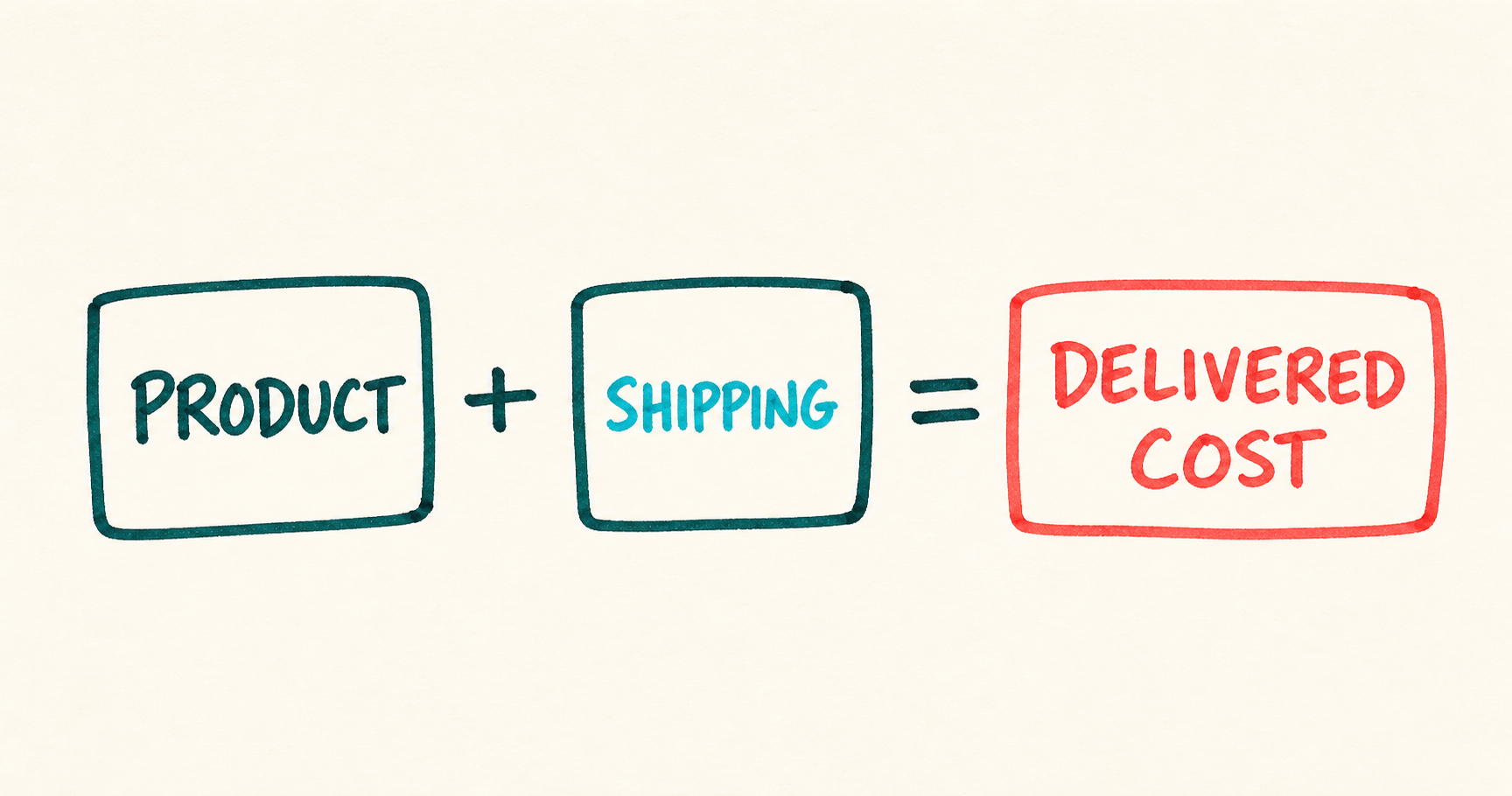
Shortlist two or three exact products, then record the details that will affect the parcel. Use the same destination for each row. Use the delivered cost, not the homepage price.
- 1
Freeze the brief
Write down the buyer, product type, variant, print area, destination, and the price range you are willing to test.
- 2
Fill one row per product
Record the SKU or blank, material, variants, template, product price, provider shipping, production location, production time, and delivered total.
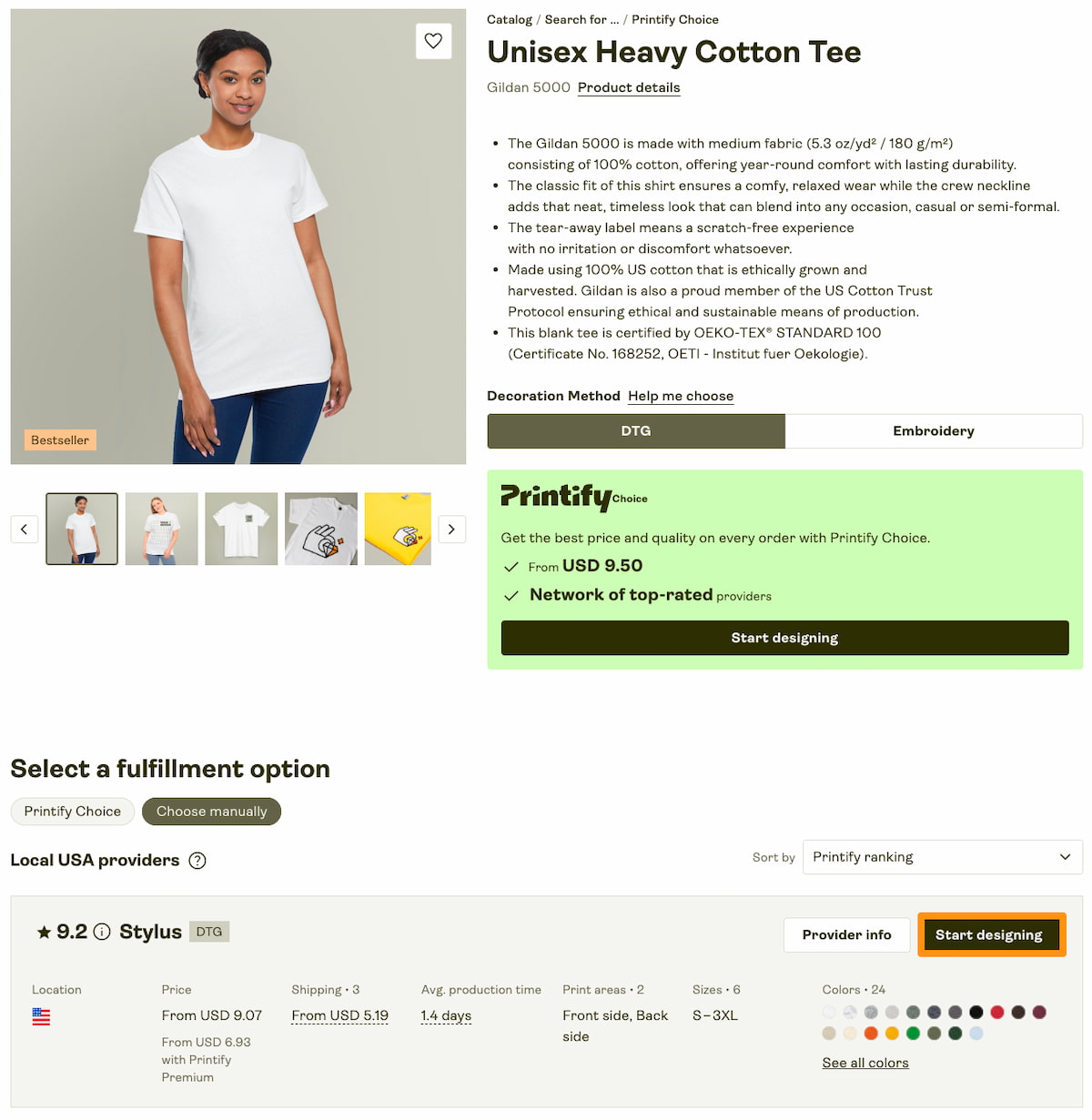
This is the comparison that matters: one product, its print areas, its providers, its shipping, and its available variants. Screenshot from Printify (opens in a new tab) - 3
Mark unknowns
If a provider does not show a current detail, write 'unknown' and verify it before you publish. Do not borrow an estimate from another product or region.
- Exact product or SKU
- Material, variants, and printable area
- Current file template
- Complete delivered cost for the buyer's region
- A sample plan for the product you will actually sell
Choose one product to test
Do not add a second product yet. One product with a few meaningful variants is easier to sample, photograph, price, explain, and support than a store-wide catalog. Add another format after the first product survives the file, sample, price, and listing checks.
Sources used for this guide
Check the linked source before acting on time-sensitive fees, policies, availability, or production claims.