
How to sell with Art of Where when the mockup looks finished
A polished 3D preview can still hide a weak file, a seam collision, or the wrong fabric color. Art of Where says it does not promise to catch artwork problems before printing.
Checked July 25, 2026 by POD Starter
Volatile-fact review due
Fees, integrations, locations, or policies may have changed since the displayed check date. Open the linked official sources before acting.
Choose cut-and-sew when seams matter
Choose Art of Where when the artwork must wrap a cut-and-sew garment, bag, scarf, or home product. Its Montreal team prints, cuts, sews, checks, and packs in one studio.
This workflow needs more prepress care than a front-print T-shirt. Fabric changes color, seams interrupt artwork, and you own file quality and sizing.
Find the last safe moment before fabric is cut
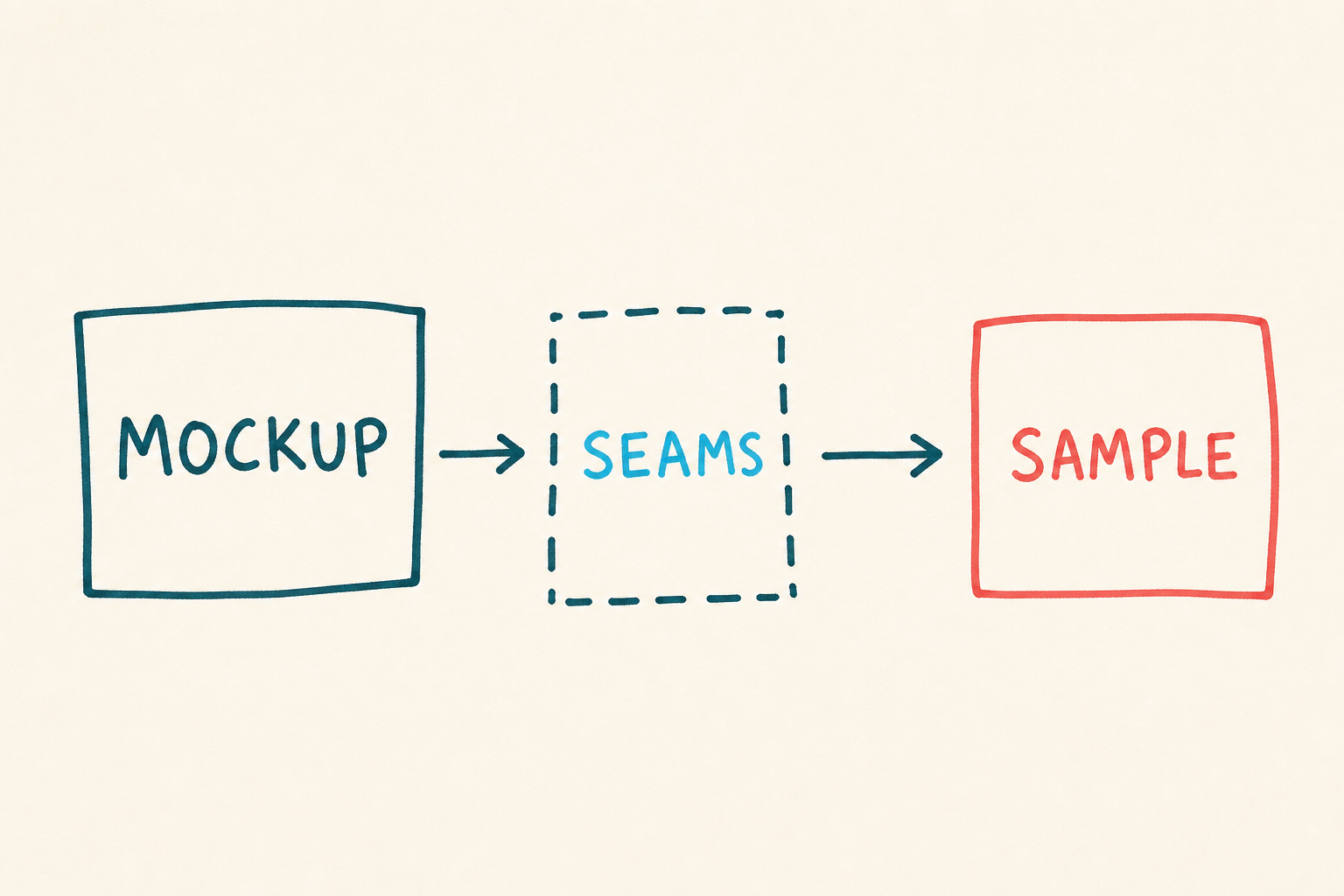
The file-to-fabric handoff
- 1
Buyer pays the store
An integrated or manual sale records the retail payment under the merchant's terms.
- 2
The product maps to AOW
The order needs the correct saved product, variants, artwork, address, and branding.
- 3
Your payment releases it
A saved card can automate eligible integrations; other routes need manual payment.
- 4
The dashboard shows a hold
Official pages disagree on its length, so rely on the live order status rather than a promised window.
- 5
Montreal prints and builds it
The studio prints, cuts, sews, checks, packs, and sends the order to its shipping route.
Do not build a process around a six-hour or 12-hour cancellation promise. Art of Where currently publishes both. Treat payment as final approval and stop a questionable order before paying whenever possible.
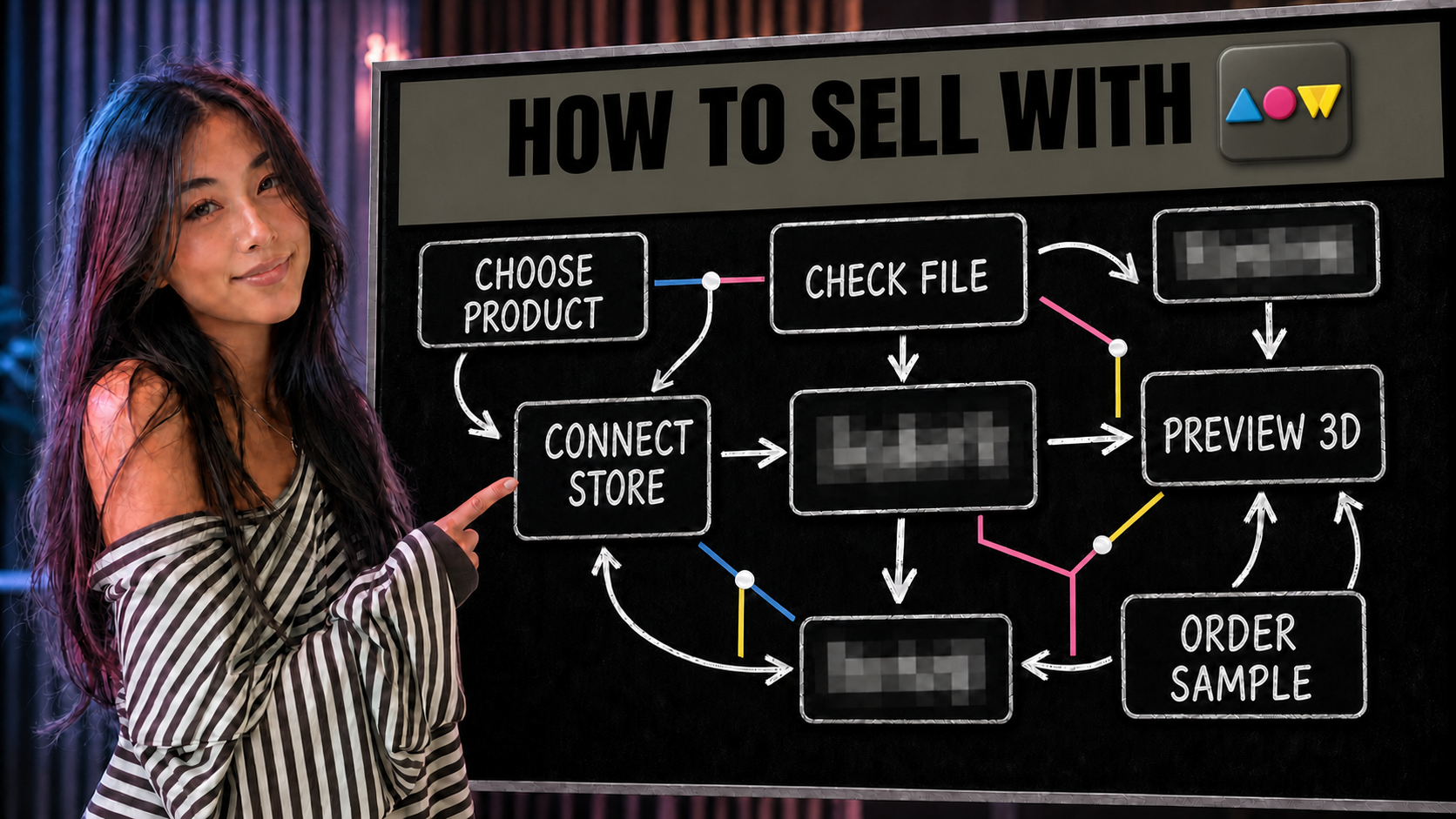
Verify the order flow:
Move from color chart to finished product
- 1
Enable the dropship account
Create the free account, accept the dropship terms, and confirm the live product price, integration route, destination, and payment method.
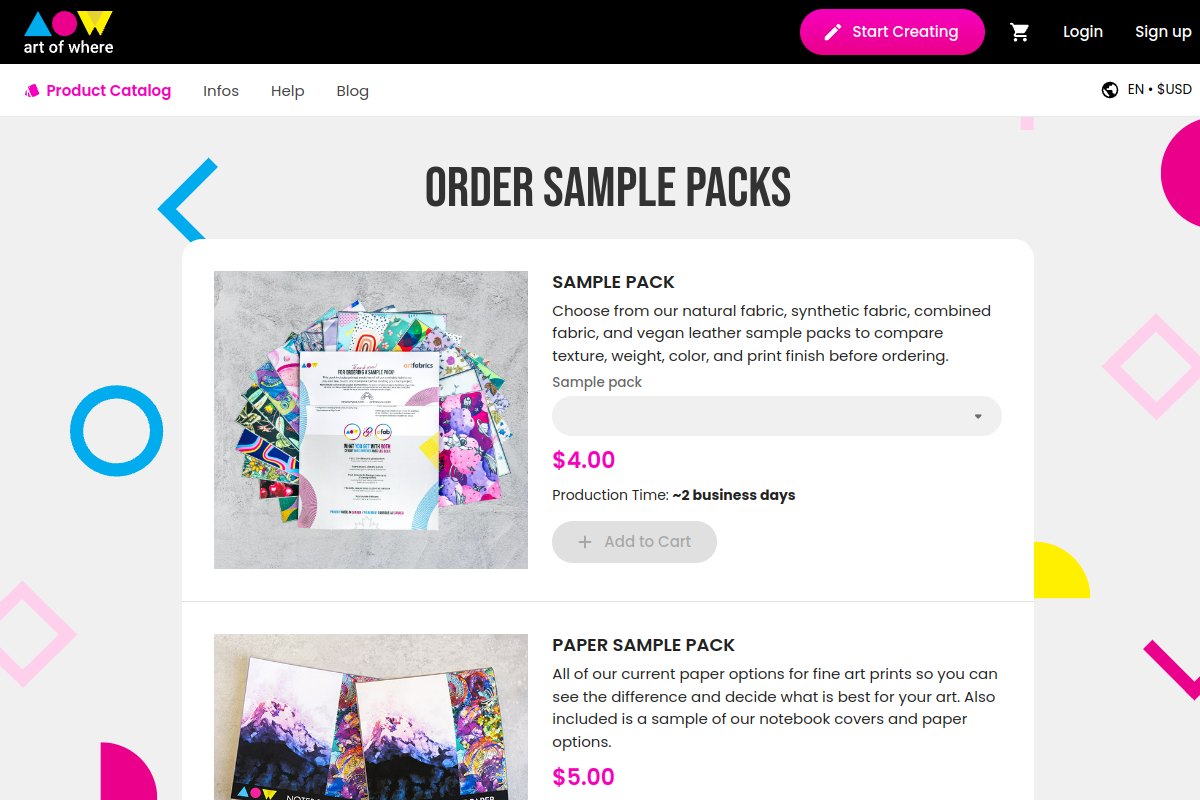
Sample packs let you compare fabric, paper, and printed color before committing. Art of Where sample packs (opens in a new tab) - 2
Choose the fabric before the palette
Order the relevant fabric or paper pack and a printed color chart. Finalize colors only after seeing how that material handles the artwork.
- 3
Build around seams and movement
Use the exact product template. Keep faces, text, borders, and other precise details away from seams, folds, zippers, waistbands, and uncertain trim edges.
- 4
Map the store and the brand extras
Connect a documented platform or plan manual fulfillment, save the card where automation is supported, and select the label, artist card, or package sticker for that product.
- 5
Approve one finished object
Order the exact product and route. Check color, construction, sizing, branding, packing, and delivery before activating automatic fulfillment.
Keep the live workflow open while you set up:
Price every branded piece in the parcel
| Decision | What to verify |
|---|---|
| Fulfillment charge | Pay per order; wholesale pricing for qualifying quantities |
| Production route | In-house production. Montreal, Canada |
| Branding | Custom clothing labels, artist cards, and packaging stickers. |
| Store connection | Etsy, Shopify, WooCommerce |
Run these checks with one exact product and destination:
- Use the dropship price for the exact product and variant, then compare the quantity threshold if a small wholesale run is realistic.
- Add shipping, tax or customs exposure, store fees, manual-order labor, customer returns, and a remake reserve.
- Include each $1 label, artist card, or exterior sticker selected for the order instead of treating branding as universally included.
- Keep a card on file for eligible automatic integrations and enough available balance before the store payout.
- Price longer cut-and-sew production and international transit into the buyer promise rather than hiding them in the margin.
Check current costs and billing:
Approve seams, fabric, fit, and branding
Order the version a buyer will receive, then record the result:
- Compare the print with the physical color chart on the exact fabric, especially skin tones, gradients, and brand colors.
- Inspect seams, panel joins, waistbands, zippers, folds, and trim edges for interrupted artwork.
- Check material hand, opacity, stretch recovery, drape, construction, measurements, and fit.
- Verify the custom label, artist card, exterior sticker, return address, and remaining Art of Where identification.
- Record payment, production duration, shipment origin, carrier, customs, transit, packing protection, and delivered condition.
Read the current sample or issue policy:
What the mockup and shipping address cannot prove
Art of Where's company page identifies Montreal, Canada as the production studio. Shipping information mentions Champlain, New York, but does not identify it as a factory.
The production page says six hours; the return policy and order guides say 12. Use the dashboard and avoid a fixed cancellation promise.
Art of Where does not guarantee an artwork-quality check before printing. Custom orders are generally non-refundable, wrong-size products are not remade, and defects need photos within the policy window.
Integration pages conflict: one lists Shopify, Big Cartel, Etsy, WooCommerce, and BigCommerce, while another documents Squarespace. Verify the live account before promising a platform.
Recheck the current limits before launch:
A few common questions
Is an Art of Where account free?
Yes. Art of Where says account and Design Lab use are free. It charges for products, shipping, selected branding, and applicable tax when an order is placed.
Where does Art of Where make its products?
Its official company page says products are printed, cut, sewn, checked, and packed in its Montreal, Canada studio. A US shipping handoff should not be described as a second factory.
Which stores integrate with Art of Where?
Its integration FAQ lists Shopify, Big Cartel, Etsy, WooCommerce, and BigCommerce. A separate official guide documents Squarespace, so confirm the current list inside the account.
Does Art of Where check artwork before printing?
No prepress check is guaranteed. You own file quality, color, placement, and sizing before the order reaches production.
Can I return an Art of Where sample?
Custom printed orders are generally non-refundable. Verified manufacturing defects can receive a remedy, but wrong sizing and artwork errors are excluded under the current policy.
Sources and screenshot credits
Show 13 official sources
- Art of Where returns and artwork policy(opens in a new tab)
- Art of Where Montreal production studio(opens in a new tab)
- Art of Where manual dropship orders(opens in a new tab)
- Art of Where labels and packaging(opens in a new tab)
- Art of Where sample packs(opens in a new tab)
- Art of Where(opens in a new tab)
- Art of Where dropshipping(opens in a new tab)
- Art of Where listed integrations(opens in a new tab)
- Art of Where account cost(opens in a new tab)
- Art of Where Squarespace connection(opens in a new tab)
- Art of Where integration payments(opens in a new tab)
- Art of Where accepted payment methods(opens in a new tab)
- Art of Where production and shipping estimates(opens in a new tab)

Get updates for this guide.
Keep up to date with news and announcements from the print-on-demand industry.