The best print-on-demand companies and sites in 2026
Checked July 25, 2026 by POD Starter
Volatile-fact review due
Fees, integrations, locations, or policies may have changed since the displayed check date. Open the linked official sources before acting.
The short answer
Printful is the simplest all-round fulfillment option for many beginners, while Printify is stronger when you want to compare production partners. Gelato suits international sellers of common products. Fourthwall is the cleanest hosted-store option for creators. Redbubble and TeePublic are marketplaces, so they trade control for built-in discovery.
Decision rule
Pick the business model before the supplier. A cheap shirt is not cheap if the cash flow, shipping route, or return policy does not fit your store.
Quick verdicts
- Guide cluster
- 18 companies and sites
- Simplest supplier workflow
- Printful
- Most provider choice
- Printify
- Hosted creator-store pick
- Fourthwall
The best POD companies at a glance
There is not one winner for every store. The shortlist changes with your product, buyer location, sales channel, and tolerance for operational work. This table gives each platform one job it does especially well.
How we built this shortlist
- 1
Product fit
Can it make the product and variants the buyer needs?
- 2
Delivered cost
Do product, shipping, fees, and cash flow leave room?
- 3
Buyer route
Where is the item produced and how does it travel?
- 4
Workflow
Who owns checkout, support, returns, and pricing?
- 5
Failure mode
What is most likely to break the promise or margin?
| Company or site | Model | Best for | Main tradeoff |
|---|---|---|---|
| Printful | Fulfillment supplier | A guided, all-round setup | Some routes cost more than marketplace-style networks |
| Printify | Supplier network | Comparing makers and prices | Quality and shipping vary by chosen print provider |
| Gelato | Supplier network | Common products sold across countries | You cannot choose the exact production country |
| Fourthwall | Hosted creator store | Creators who want store and fulfillment together | Less portable than owning an independent storefront |
| Prodigi | Fulfillment supplier | Art prints, photography, and wall products | Many integrations use a map-after-listing workflow |
| Gooten | Supplier network | Broad catalogs and growing order volume | Orders can split across manufacturers and parcels |
| Redbubble | Marketplace | Testing art across many product types | Current account fees can remove a large share of earnings |
| TeePublic | Marketplace | A fast apparel-led upload workflow | You do not set prices, and search access depends on account category |
Sources for this section
- Printful pricing and account costs (opens in a new tab)
- Printify pricing (opens in a new tab)
- Gelato account costs (opens in a new tab)
- Fourthwall transaction fees (opens in a new tab)
- Prodigi setup fees (opens in a new tab)
- Gooten payment, pricing, and taxes (opens in a new tab)
- Redbubble account fees (opens in a new tab)
- TeePublic account categories (opens in a new tab)
Print-on-demand company vs. print-on-demand site
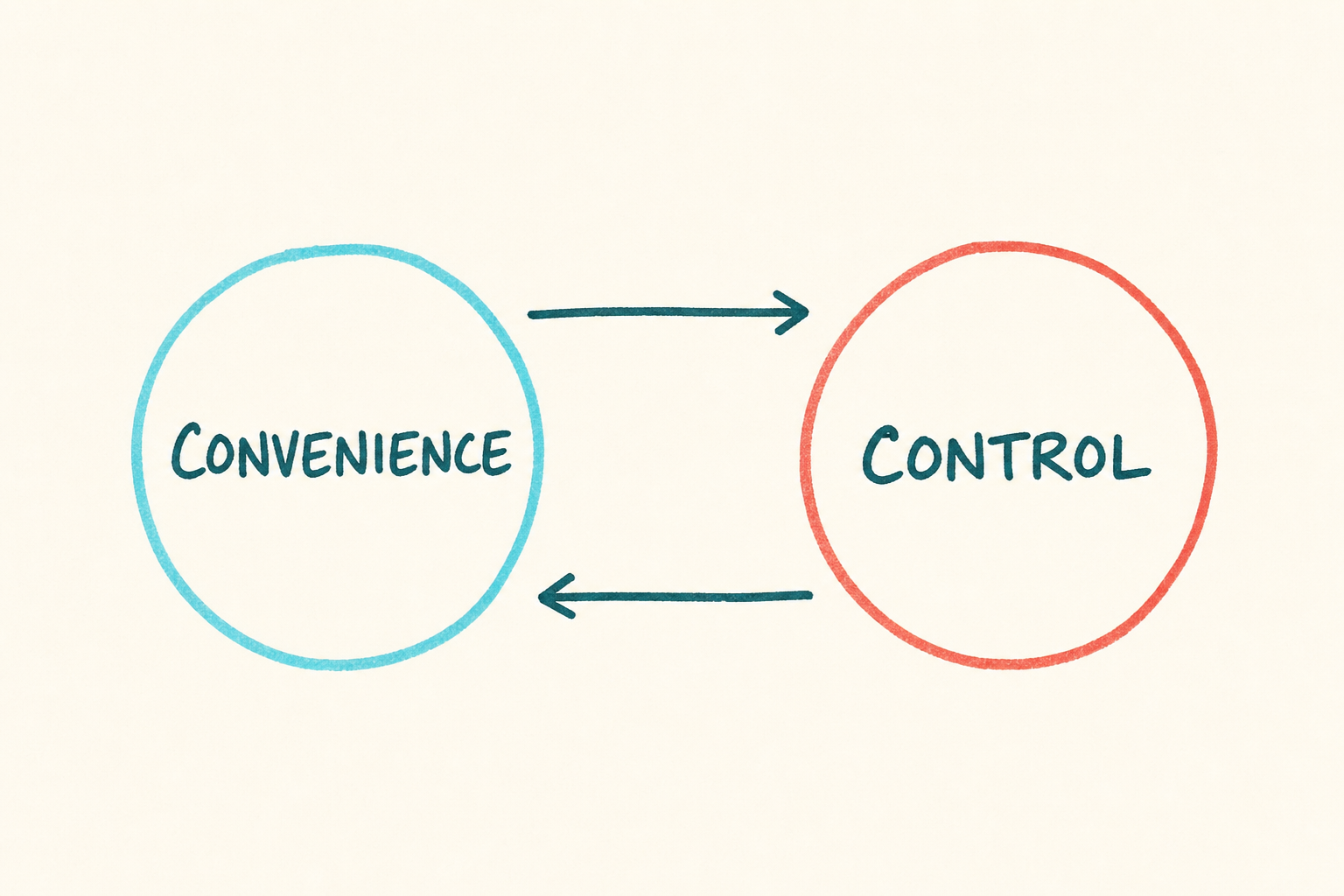
A fulfillment supplier connects to a store you control. Your customer pays the store. The supplier then charges you for the product, print, shipping, tax, and any extras. That timing creates a cash-flow gap. Use the first-listing pricing guide to calculate how much cash you may need before your marketplace releases the buyer's payment.
A marketplace such as Redbubble or TeePublic owns the checkout and customer relationship. It sets the base economics, handles production, then pays your eligible earnings. Setup is easier, but you surrender pricing control, customer data, and some brand control.
Fourthwall sits between those models. It gives creators a hosted storefront and manages the commerce stack, but the page can still feel like the creator's own shop.
Choose a fulfillment supplier when you want:
- Your own Etsy, Shopify, WooCommerce, or similar storefront
- Control over retail price, presentation, and customer support
- The option to change suppliers without rebuilding your audience
Choose a hosted site or marketplace when you want:
- The shortest route from an artwork file to a live product
- Checkout, tax handling, and fulfillment managed in one place
- A simpler test before you build an independent store
1. Printful: best all-round supplier for beginners
Printful is the simplest starting point in this shortlist when workflow consistency matters more than squeezing every possible dollar from the base cost. Its product builder, store connections, order flow, and support material sit in one system.
There is no setup fee, monthly requirement, or order minimum on the free account. You pay when an order is confirmed. Your buyer's payment and Printful's charge are separate transactions, so keep enough balance available to cover fulfillment.
The catch is price. A simpler, more controlled workflow can cost more than a network where you shop among several manufacturers. Branding materials and some products are also facility-dependent. Use the Printful setup guide to check the route, not just the catalog page.
Sources for this section
2. Printify: best for supplier choice and price comparison
Printify is a network of independent print providers. That is its advantage and its complication. The same broad product can have different blanks, print areas, costs, ratings, production locations, and shipping estimates depending on the provider you select.
The free plan is enough to launch. Printify separately charges the product, shipping, and applicable tax when the order goes to production. Automatic approval saves time later, but manual approval is safer while you are checking your first orders.
Do not treat a Printify sample as a sample of the whole platform. It tests one product from one print provider. If you switch provider, use the Printify sample guide and test again.
Sources for this section
3. Gelato: best for common products sold internationally
Gelato routes orders through a distributed production network. The appeal is shorter production-to-customer routes for many common products, especially when your buyers are spread across countries.
The free account has no setup fee or order minimum. Direct integrations cover major store platforms. The important limitation is routing: Gelato chooses a production location using destination, capability, stock, and capacity. You cannot promise a specific production country for every order.
Gelato is worth testing for posters, cards, mugs, and straightforward apparel sold across regions. The Gelato selling guide explains how its routing works. It is less useful when your brand promise depends on one named factory or a highly specific local-origin claim.
Sources for this section
4. Fourthwall: best hosted store for established creators
Fourthwall combines a storefront, print-on-demand catalog, checkout, memberships, and creator tools. It is especially sensible when an audience already knows you and you want to sell without assembling Shopify, a supplier, and extra creator software.
Fourthwall currently charges no platform transaction fee on physical products on its free plan, but production cost and payment processing still apply. "Zero platform fee" does not mean a free order.
The tradeoff is portability. A hosted stack is easy to start and harder to separate later. The Fourthwall selling guide covers that complete workflow. Treat Fourthwall as a business-model choice, not merely another printer.
Sources for this section
5. Prodigi: best for art prints and specialist wall products
Prodigi is the first supplier we would shortlist for fine-art prints, photography, frames, and specialist wall products. Its catalog and production network go deeper in that direction than the typical T-shirt-first service.
There is no setup or required monthly fee. Orders can arrive through integrations, an API, CSV, or manual entry. On several store integrations, you create the listing first and then map it to a Prodigi product. That is less immediate than a push-to-store builder.
Use Prodigi when the printed object is the product, not an afterthought. Follow the Prodigi art-print guide, then order the exact paper, finish, size, and route you plan to sell.
Sources for this section
6. Gooten: best for broad catalogs and operational scale
Gooten uses multiple manufacturers and has a broad catalog. That can work well once you need more products and a supplier built around order operations rather than a beginner-led design experience.
There is no membership fee. Gooten charges product and shipping costs when production begins. New accounts should allow for manual review of the first few orders, which can add time during launch.
Most products are usually produced in the United States, with international production available for a smaller subset. A cart can split into several shipments when products use different vendors. Use the Gooten selling guide to model that before promising one parcel or one shipping charge.
Sources for this section
7. Redbubble: best marketplace for a broad product test
Redbubble can put one artwork across apparel, stickers, home goods, and wall art without a separate store. That makes it useful for learning which product-design combinations attract attention.
The economics need a hard look. Redbubble changed its account fees again in March 2026. Standard and Premium accounts can lose a substantial share of monthly earnings to tier fees, with another fee on markup earnings above 20 percent. Read the live fee page before deciding that a sale is profitable.
Redbubble still offers reach and a wide catalog, but it is no longer a platform where a beginner should upload first and calculate later. Use the 2026 Redbubble fee guide before publishing.
Sources for this section
8. TeePublic: best for a fast apparel-led marketplace test
TeePublic is quick to upload to, free to join, and simple to understand. It controls product prices and pays fixed earnings by product, sale state, and account category. That removes pricing work, but it also removes pricing control.
The account-category system matters more than most beginner guides admit. Only Artisan accounts are eligible for TeePublic's on-site search. Pending and Apprentice accounts can publish, but their designs are not discoverable through that search.
Use TeePublic as a low-friction distribution channel, not the foundation of a business you need to control. The TeePublic selling guide explains the category and payout rules.
Sources for this section
Ten specialist routes that can beat the generalists
The eight options above cover the most common starting models. A specialist wins when the product, buyer region, branding, or sales channel matters more than having the broadest catalog.
| Company or site | Shortlist it for | Costly trap |
|---|---|---|
| CustomCat | US-first apparel from one Detroit operation | Returns sent to its facility are donated |
| Spreadconnect | A store concentrated in North America or Europe | One point of sale cannot connect to both regional accounts |
| teelaunch | A broad gift catalog with a simple store connection | Canceling in the storefront does not cancel fulfillment |
| TPOP | France-based production and eco-led branding | US delivery is currently suspended |
| Inkthreadable | UK apparel, labels, and packing-slip branding | Unpaid imported orders do not enter production |
| Art of Where | All-over-print, cut-and-sew, and artist branding | The mockup is not a prepress approval |
| Lulu Direct | Books sold through your own storefront | A PDF proof alone does not test the store connection |
| ShineOn | Personalized jewelry and message-card products | Confirm current remedy rules in the account before launch |
| Qikink | India-focused fulfillment with COD workflows | RTO charges can erase an untested margin |
| Amazon Merch on Demand | Amazon-managed listings sold for royalties | Approval and account capacity remain outside your control |
Open the guide that matches the constraint:
Sources for this section
- CustomCat account and fulfillment FAQ (opens in a new tab)
- Spreadconnect regional-account choice (opens in a new tab)
- teelaunch account cost (opens in a new tab)
- TPOP current pricing (opens in a new tab)
- Inkthreadable pricing and reward tiers (opens in a new tab)
- Art of Where account cost (opens in a new tab)
- Lulu Direct per-order pricing (opens in a new tab)
- ShineOn seller overview (opens in a new tab)
- Qikink current pricing (opens in a new tab)
- Amazon Merch on Demand overview (opens in a new tab)
How to choose without opening eighteen accounts
- 1
Choose the selling model
Decide whether you want your own store, a hosted creator store, or a marketplace. This removes half the list immediately.
- 2
Freeze one test order
Use one exact product, size, print method, and buyer destination. Comparing different products tells you almost nothing.
- 3
Calculate the full cash flow
Record buyer payment timing, product cost, supplier shipping, tax, marketplace fees, payout delay, and a replacement scenario.
- 4
Inspect the workflow
Create a draft product. Check file setup, variant controls, order approval, tracking, and what happens when an address is wrong.
- 5
Order the sample
Judge print, material, placement, packaging, tracking, and delivery time. A dashboard cannot answer those questions.
Sources for this section
Sample checklist
- Order the exact blank, color, size, print method, and provider you intend to sell
- Photograph the parcel before opening it
- Check print placement against the submitted file
- Inspect color, fine detail, white underbase, seams, and edges in daylight
- Wash or use the product as a customer would
- Record production time separately from carrier time
- Read the packing slip and return address
- Recalculate margin using the real charge
A sample does not prove every future order will match. It does turn an abstract provider comparison into evidence you can act on.
Sources for this section
Common questions
What is the best print-on-demand company for beginners?
Printful is the easiest general starting point for many beginners because its product, integration, and order workflow is consistent. Printify can be cheaper or more flexible, but choosing among independent print providers adds work.
Which print-on-demand company has the best quality?
No company has one quality level across every product and route. Compare the exact blank, print method, production partner, and destination, then order a sample. Network platforms can vary significantly between providers.
Can I start print on demand for free?
You can open accounts and create products without a required subscription on every platform in this shortlist. A real launch still has costs: samples, marketplace fees, production charges, shipping, taxes, refunds, and possibly ads.
Is Printify better than Printful?
Printify is better for comparing providers and controlling base cost. Printful is better for a simpler, more consistent workflow. The right answer depends on the exact product and destination, not the platform homepage.
Should I sell on Redbubble or build my own store?
Redbubble is faster for testing artwork without running checkout or fulfillment. Your own store gives you control over price, customer experience, and supplier choice. Redbubble's current account fees make the margin comparison especially important.
Official sources used
Show 18 official sources
- Printful pricing and account costs(opens in a new tab)
- Printify pricing(opens in a new tab)
- Gelato account costs(opens in a new tab)
- Fourthwall transaction fees(opens in a new tab)
- Prodigi setup fees(opens in a new tab)
- Gooten payment, pricing, and taxes(opens in a new tab)
- Redbubble account fees(opens in a new tab)
- TeePublic account categories(opens in a new tab)
- CustomCat account and fulfillment FAQ(opens in a new tab)
- Spreadconnect regional-account choice(opens in a new tab)
- teelaunch account cost(opens in a new tab)
- TPOP current pricing(opens in a new tab)
- Inkthreadable pricing and reward tiers(opens in a new tab)
- Art of Where account cost(opens in a new tab)
- Lulu Direct per-order pricing(opens in a new tab)
- ShineOn seller overview(opens in a new tab)
- Qikink current pricing(opens in a new tab)
- Amazon Merch on Demand overview(opens in a new tab)

Get updates for this guide.
Keep up to date with news and announcements from the print-on-demand industry.